
Travel Tips
St. Maarten Currency: Dollars, Guilders, Euros and Tipping
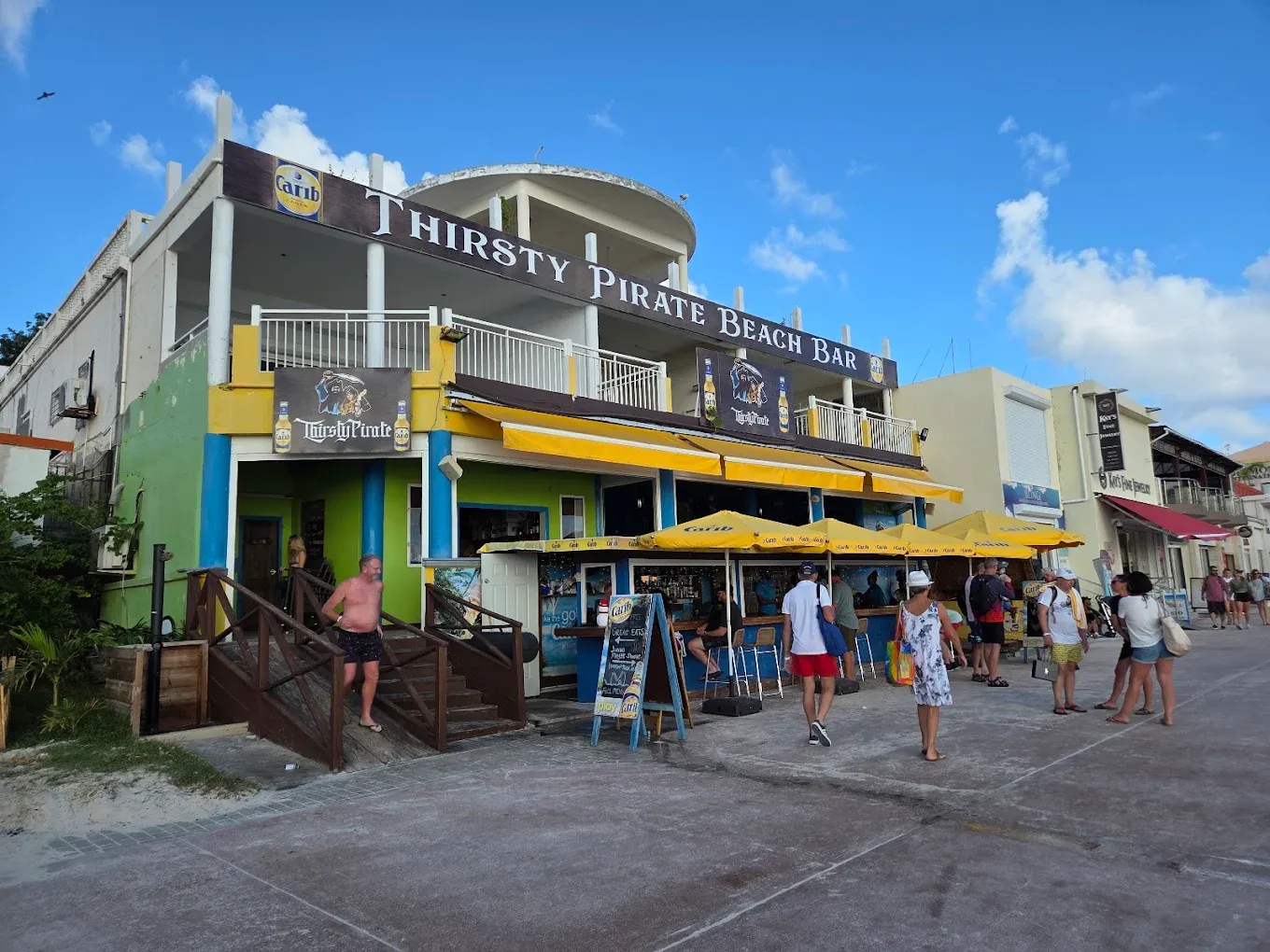
Money questions come up at our bar every single day, usually right after someone steps off the water taxi and wonders if they should have changed cash on the ship. Good news: on the Dutch side of the island, you almost certainly don’t need to. Here’s how currency, cards and tipping actually work in St. Maarten, in plain terms.
The short answer
Sint Maarten (the Dutch side) officially uses the Caribbean guilder (XCG), but the US dollar is accepted almost everywhere. In Philipsburg, and especially along Front Street and the boardwalk, prices are usually posted in US dollars, so most visitors never handle a guilder at all.
Saint-Martin (the French side) uses the euro, though many businesses there take US dollars too.
A little background: the Caribbean guilder replaced the old Netherlands Antillean guilder (ANG, sometimes written NAf) on 31 March 2025. It’s pegged to the US dollar at 1 USD = 1.79 XCG, so the exchange rate doesn’t bounce around. If you see an older guidebook mention “NAf” or “ANG,” that’s the former currency.
Dutch side vs French side
St. Maarten is one island shared by two countries, and each side has its own money.
- Dutch side (Sint Maarten): Philipsburg, the cruise port, Great Bay Beach, Simpson Bay and Maho. Official currency is the Caribbean guilder, but the US dollar is the everyday currency for visitors. Change is often given in USD, sometimes in guilders, so don’t be surprised if a few colorful notes end up in your wallet.
- French side (Saint-Martin): Marigot, Grand Case and Orient Bay. Official currency is the euro. Many shops and restaurants there also accept US dollars, but some convert at a flat 1:1 rate, meaning a €20 price costs you $20. When that’s the case, paying in euros or by card is often better value.
If you’re spending your whole port day in Philipsburg, the French side question doesn’t really apply. If you’re heading over on a tour, it’s worth knowing.
Do you need to exchange money?
For a cruise day on the Dutch side, no. Bring US dollars and a card and you’re set. There’s no need to buy guilders before you arrive, and exchanging money at the port or on the ship usually just costs you a fee for currency you won’t need.
If you’re staying on the island for a week and spending a lot of time on the French side, having some euros can make sense. For everyone else, dollars and plastic cover it.
Cards, cash and ATMs
Major credit and debit cards are widely accepted in Philipsburg, including at most restaurants, bars and shops on Front Street and the boardwalk.
That said, cash still earns its keep. Carry some small US bills for the things where a card is awkward or not accepted:
- Beach chair and umbrella rentals
- Taxis and water taxis
- Tips
- Small purchases from street vendors
Try to bring ones, fives and tens rather than big notes. Breaking a $100 for a couple of beach chairs isn’t fun for anyone.
ATMs are easy to find in Philipsburg, and many dispense US dollars. Before you travel, check with your card issuer about foreign transaction fees and ATM fees. Some cards charge extra for every purchase abroad, and it adds up over a vacation. If a card machine offers to charge you in your home currency instead of the local one, it’s usually better value to decline and pay in the local currency (USD on the Dutch side).
Service charges and tipping
This is the part that trips people up, so let’s be clear about it.
Many restaurants and bars on the island add a service charge to the bill, commonly 10–15%. It’s a normal practice here, not a hidden fee, but it does mean you should always check your bill before adding a tip so you don’t tip twice by accident.
At Thirsty Pirate, all prices are in US dollars and a 15% service charge is added to all checks. That’s noted on our menu, and it’s there on every bill. Anything extra on top is completely optional and up to you, if you feel the service earned it.
Here’s a quick guide to what’s typical around the island:
| Situation | What’s typical |
|---|---|
| Restaurant or bar bill with a service charge | Service charge covers it; extra tip is optional for great service |
| Restaurant or bar bill with no service charge | Around 10–15% is customary |
| Taxi driver | Often 10–15%, or round up the fare |
| Tour guide or excursion crew | Often 10–15% of the tour price, or a few dollars per person |
| Beach chair attendant | Optional; a small tip is appreciated |
The simple rule: look for “service charge” or “service included” on the bill. If it’s there, you’ve already covered the tip. If you’re not sure, just ask your server. Nobody here minds the question.
What things cost and budgeting tips
Philipsburg is a tourist town, so prices on Front Street and the boardwalk are roughly what you’d expect in a popular Caribbean port. A few ways to keep your day predictable:
- Factor the service charge into your math. When you glance at a menu, add it in your head so the final bill doesn’t surprise you.
- Ask if a price is in dollars. On the Dutch side it almost always is, but on the French side a number could be euros.
- Beach setups are usually priced as a bundle, like a couple of chairs and an umbrella, and sometimes include drinks. Ask what’s included before you sit.
- Agree on a taxi fare before you get in. Fares are generally set per person or per ride, so confirm it up front.
- Duty-free doesn’t always mean cheaper. Front Street shopping can be good value, but compare with prices back home on bigger buys.
Money tips for cruise passengers
If you’re here for the day, keep it simple:
- Bring US dollars. No need to exchange anything for Philipsburg.
- Carry small bills for Great Bay Beach chairs, taxis and tips.
- Bring one card with no foreign transaction fees, if you have one.
- Check the bill for a service charge before you tip.
- Keep your cash and cards in a zip pocket or dry bag if you’re heading into the water.
- Leave the big bills on the ship. You won’t need them.
For the rest of your day, see our guide for cruise passengers, how to plan around how much time you have in port, things to do near the cruise port and where to eat on the Philipsburg boardwalk.
St. Maarten money FAQ
What currency does St. Maarten use?
The Dutch side, Sint Maarten, officially uses the Caribbean guilder (XCG), pegged at 1 USD = 1.79 XCG. The French side, Saint-Martin, uses the euro. In practice, US dollars are accepted almost everywhere on the Dutch side.
Do they take US dollars in St. Maarten?
Yes. US dollars are accepted almost everywhere on the Dutch side, and prices in Philipsburg are usually posted in USD. Many businesses on the French side take dollars too, though some convert at a flat 1:1 rate with the euro.
Should I exchange money before a cruise stop in St. Maarten?
No, not for a day in Philipsburg. US dollars and a credit or debit card are all you need.
Are credit cards accepted in St. Maarten?
Major credit and debit cards are widely accepted in Philipsburg. Carry some small bills anyway for beach chairs, taxis and tips, and check your card’s foreign transaction fees before you travel.
Do you tip in St. Maarten?
Yes, but check your bill first. Many restaurants and bars add a service charge of around 10–15%, which covers the tip. Taxi drivers and tour guides are commonly tipped around 10–15%, or you can round up.
Is there a service charge at Thirsty Pirate?
Yes. All prices at Thirsty Pirate are in US dollars, and a 15% service charge is added to all checks. An extra tip on top is optional and entirely at your discretion. We’re at 69C Front St on the Philipsburg boardwalk, open daily 9 AM–6 PM.